What it is
The Library of Black Wellness is a digital archive featuring archival material, academic work, audio, visual, and literary content on how Black people care for ourselves, our families, our health, and our well-being across generations.
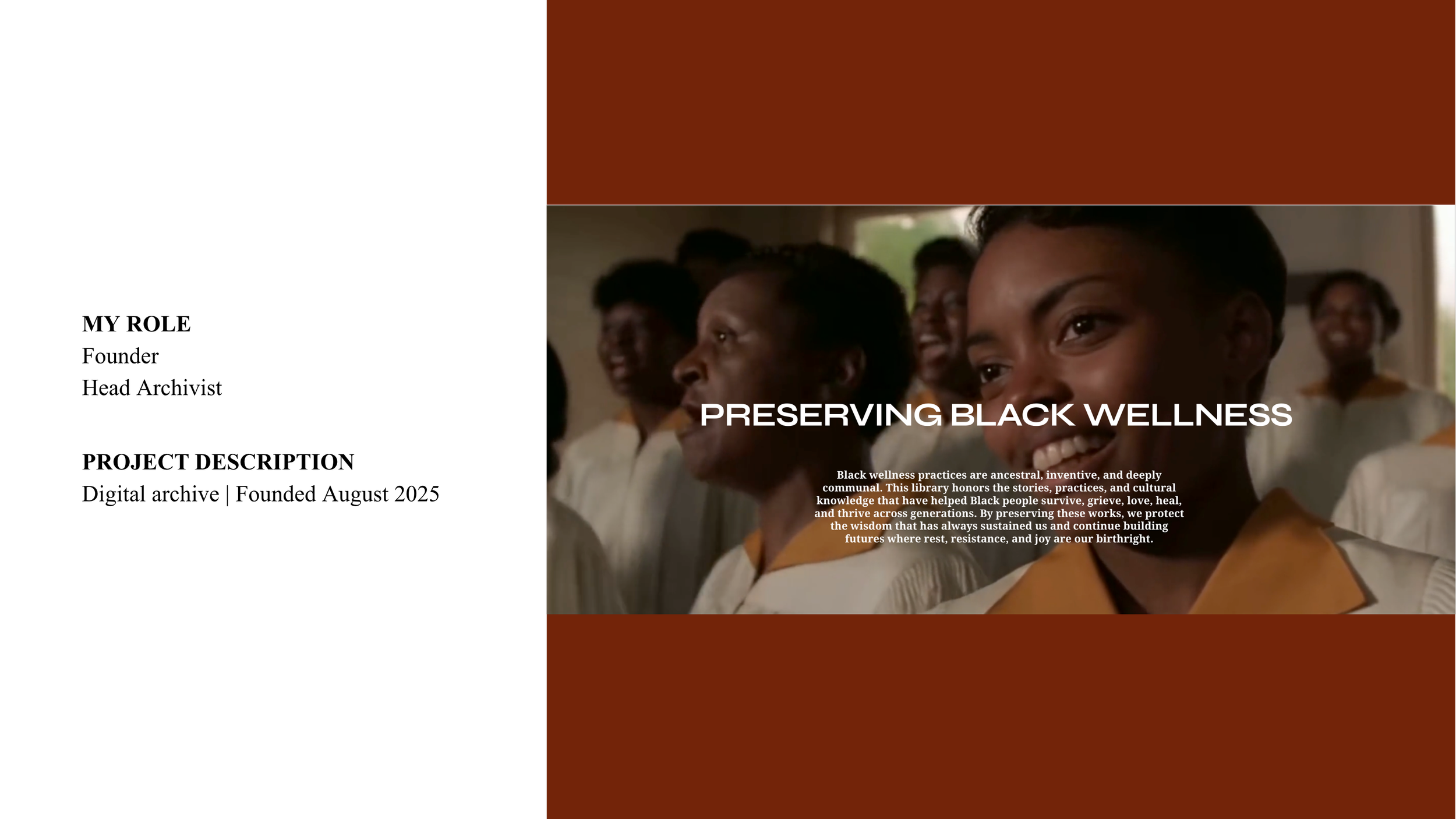
The first thing you encounter on the site is a clip from The Color Purple. Shug Avery is reconciling with her father, a pastor, after years of estrangement. I chose that moment because it's one of healing and reconciliation, both of which are at the heart of what the Library is doing: bringing back into one place what's been scattered, lost, undervalued, and waiting to be seen as a body of work rather than scattered fragments.
This body of work had also never been collected and put into one cohesive place. I wanted to build a home for it and to make it visible to prove that wellness is not something white women invented, even if they're the ones currently profiting from it.
Originally, I imagined this project as an Airtable database to organize the ancestral Black wellness work I kept finding during my research for Healthy Futures, but wasn’t doing anything else with. A friend pushed me to make something more significant. I started building the website in June 2025 and launched it in August.
Artifact 007: The introduction video to the Library of Black Wellness.
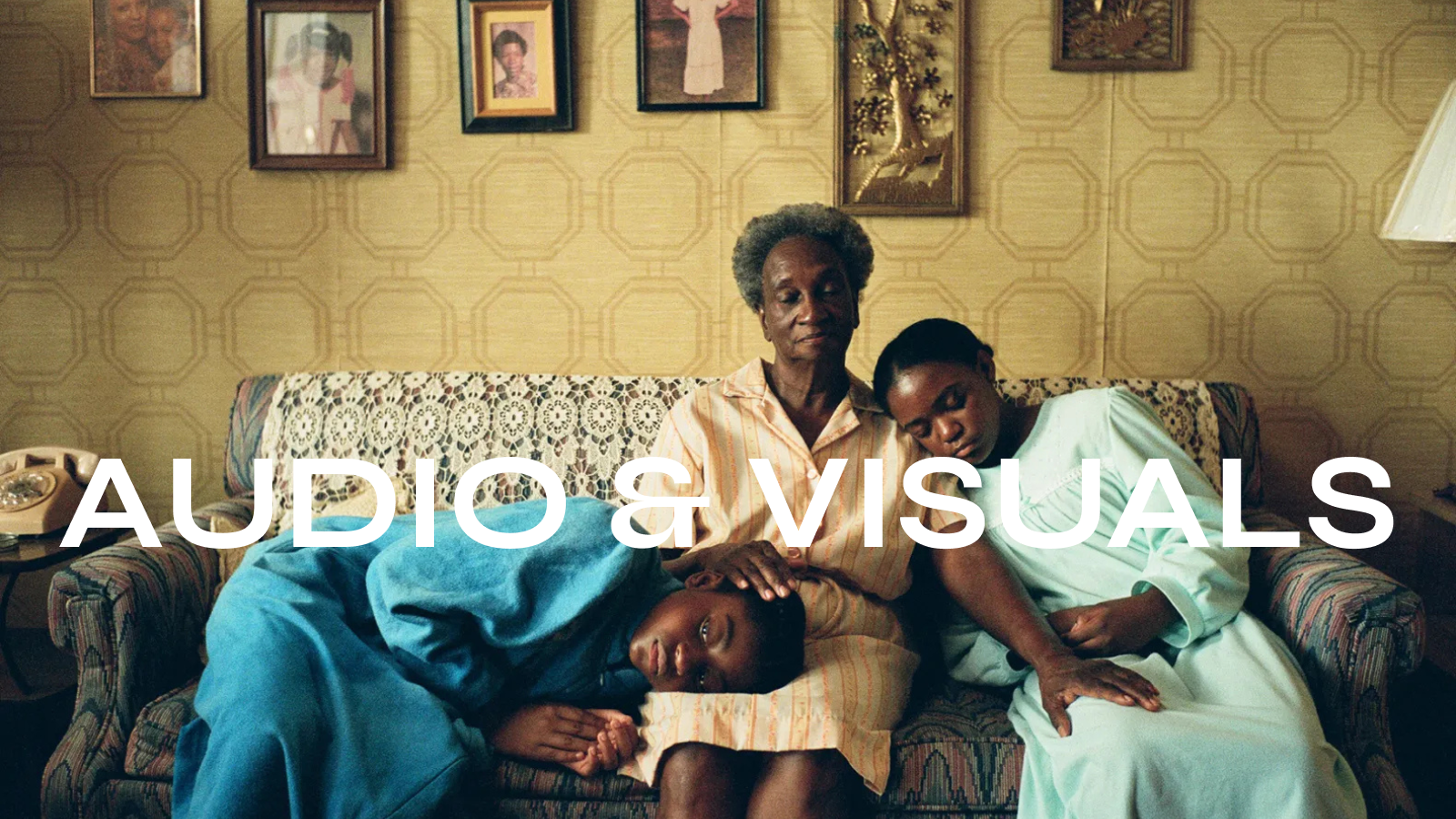
Artifact 008: A still from All Dirt Roads Taste of Salt used to highlight the care between a grandmother and her granddaughters.
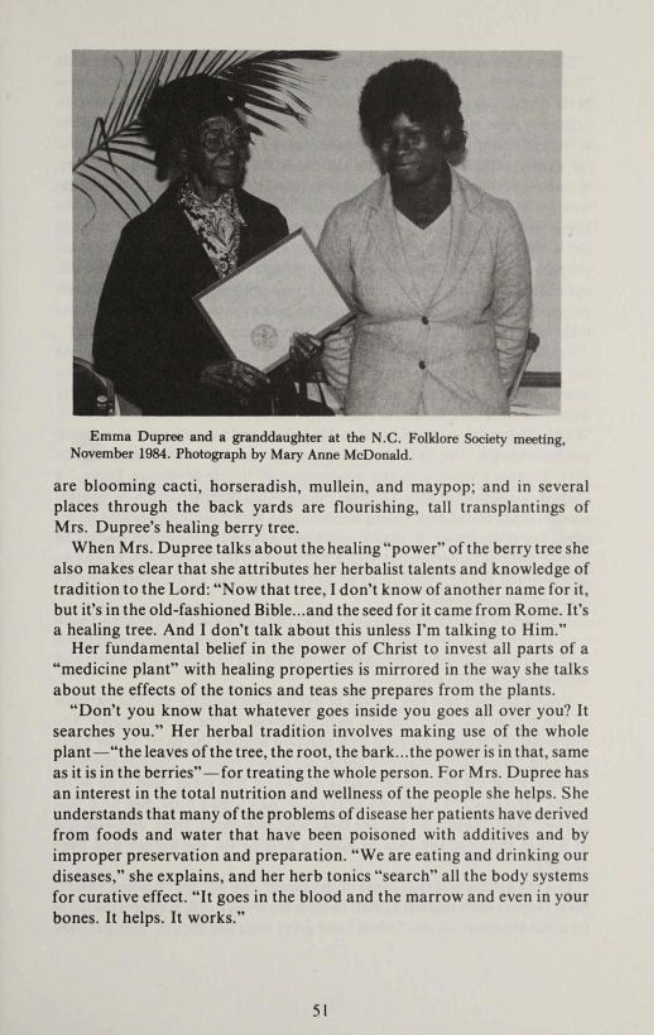
Artifact 009: A page from a journal article on Emma Dupree, a renowned North Carolina herbalist.
How wellness is defined here
The Library defines wellness through a cultural and communal lens. Wellness here doesn't refer to trends or to the contemporary commercial category. It focuses on a fuller spectrum of Black life: how we survive, how we grieve, how we heal, how we love, how we care for each other, and how we make joy possible. Spiritual continuity, emotional survival, rest, resistance, ancestral practice, and everyday acts of love. Wellness is something inherited and continually shaped by collective memory and conditions.
That editorial decision produces a specific architecture for the scope:
An op-ed by a Black physician on heart disease rates is a no-go for the archive. A piece on traditional Black midwifery absolutely belongs, because that tradition is rooted in ancestral knowledge and resistance. The test for any potential submission is: Does this work honor the stories, practices, and cultural knowledge that have helped Black people survive, grieve, love, heal, and thrive across generations?
The Library holds novels, poems, essays, academic articles, cultural commentary, spiritual practices, recipes, and community-submitted knowledge. All of it reflects a commitment to remembering how we've cared for ourselves and one another.
How I think about the Library
The Library is a preservation project, but it's preservation via curation. When I'm doing archival digging, I'm looking for things that haven't been unearthed in a long time, things that link to conversations we're having right now in ways most people wouldn't recognize. I want to uplift the contributions of Black people and make the connection between past and present visible.
When I make organizational decisions, I'm always asking: Does this make sense to someone who is not me? Someone who has never used an archive, who isn't inherently interested in Black wellness, who hasn't done historical deep dives, who hasn't been exposed to research as a discipline? I want the material to land for the novice without ever being dumbed down. I refuse to do that, in this project or any other. But I also refuse to make material inaccessible for the sake of feigning exclusivity.
How it sits inside the ecosystem
Healthy Futures and the Library of Black Wellness share an editorial thesis but do separate work. Healthy Futures is a newsletter that is current, responsive, and writing toward the future. The Library doesn't do anything outside of wellness as defined here. It holds the past.
The relationship matters in both directions. The Library gives the broader Julia Craven ecosystem a historical foundation that the newsletter can draw on and extend. Things I write about in Healthy Futures have somewhere to land more deeply. Things I find in the Library can become material for the newsletter. The two properties feed each other, but they’re distinct infrastructures for distinct work.