The mandate
The Better Life Lab at New America had received funding from the Robert Wood Johnson Foundation for an ambitious research initiative on how unprecedented pandemic-era policy spending—child tax credits, direct cash assistance, eviction moratoriums, expanded SNAP, and more—affected American families living in poverty, and what its expiration revealed about the country we want to design. The thesis question that would eventually anchor everything was: How do we design an economy that works for all families?
What was there
A research initiative of this scope—a 51,000-word report, 30+ articles, multimedia, an interactive game, a virtual event, a separate report on eviction and Black maternal and child health—needs a methodology, an editorial framework, a project plan, and the internal systems to coordinate contributors. When I came onto the project, those pieces hadn't yet been built. I built them.
The nitty gritty
A landscape scan. I authored one of the two foundational research scans that became the project’s evidence base. Without it, the work would have been a collection of disparate pieces. With it, the work had a research spine.
A facilitated storytelling framework. The team needed a way to draw on families' interviewed lived experiences without reducing them to clipped quotes. I drew on a craft I'd been refining for years across my journalism career—writing as-told-to narratives—and adapted it for a research project. Each interview included in this series became a dialogue between a member of our team and a narrator, structured around six focus areas but allowed to flow naturally. The narrators were positioned as the experts of their own lives. We made deliberate editorial choices to preserve vernacular speech and resist molding voices into the confines of standard American English. I documented the framework publicly in an essay for New America so it could be referenced and adapted by others.
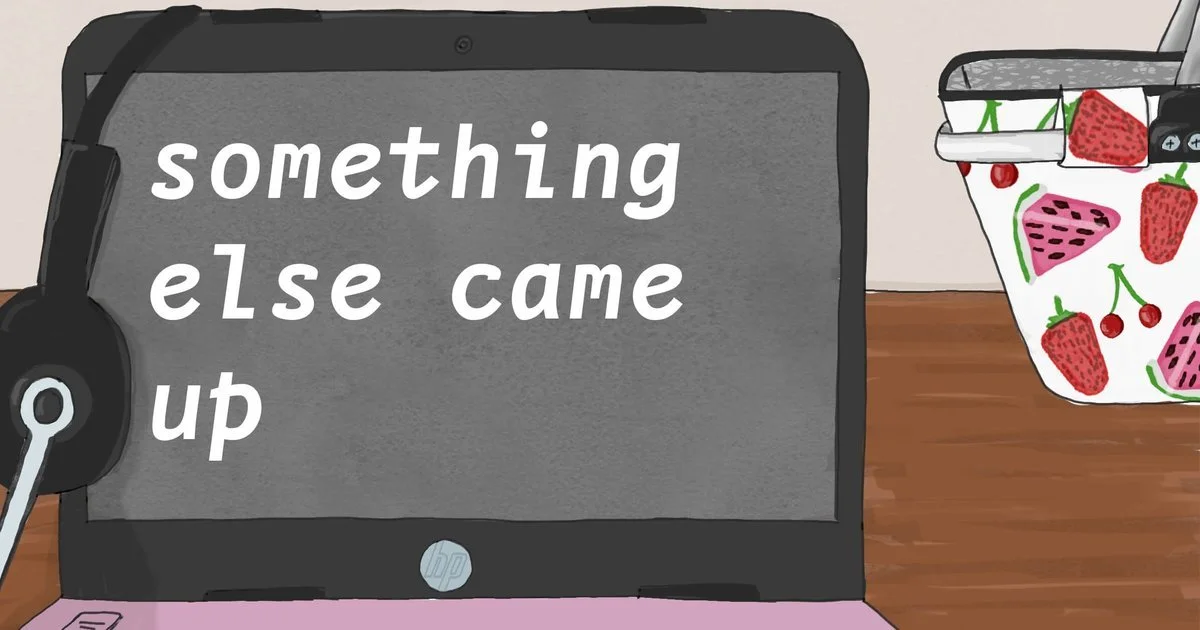
Artifact 001: The lead image for the interactive game experience. Created by Jasmine Heyward.
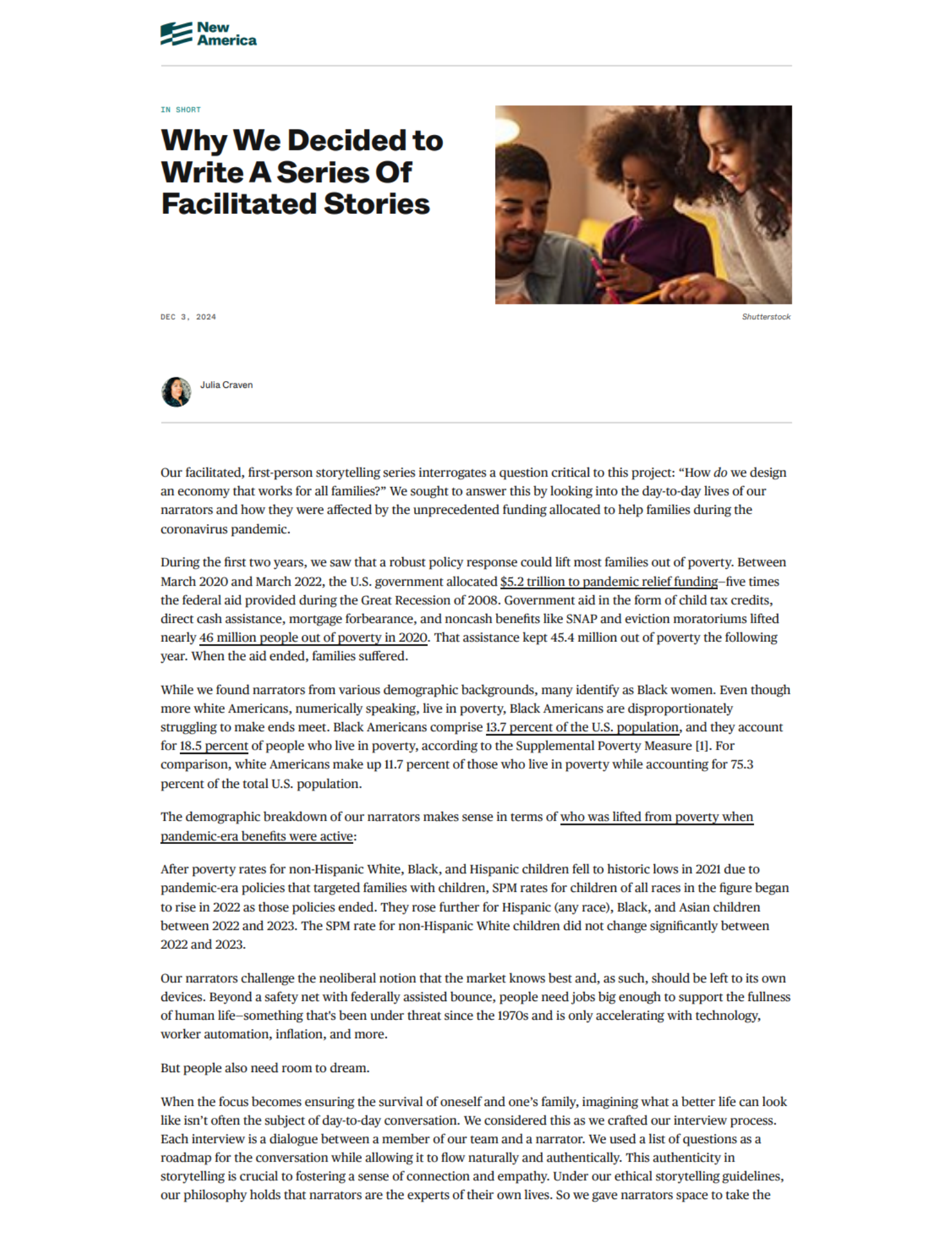
Artifact 002: A peek at the facilitated storytelling methodology.
Editorial methodology. I set the standard for how every piece of writing in the project would relate to the thesis. The through-line I enforced across 30+ articles, multimedia, and a 51,000-word report: How is this story relevant to the thesis question? Every piece had to answer to it. I also developed a news story placement strategy to help writers at the Lab successfully pitch editors.
Project management infrastructure. I built the internal systems that allowed the project to actually ship—workflows, editorial calendars, etc.
What that scaffolding made possible
A 51,000-word report on family economic security in the post-pandemic United States
30+ articles extending and contextualizing the report's findings—including 27 news articles seeded into the public conversation
A series of facilitated first-person stories from narrators across demographic backgrounds, interrogating the thesis question through lived experience
Six multimedia projects, two of which I created personally—an interactive report on Black maternal and child health in the U.S., and an accompanying infographic
An interactive game on how choice is limited for people living in poverty, which I edited with its creator
A virtual event presenting findings and convening discussion
An additional report I authored on the health effects of eviction on Black children
I edited at least 7 contributors across these outputs, shaping arguments at the outline and draft stages. I presented findings publicly to coalitions and internal partners. The editorial through-line held across every piece.
Recognition
A Glimpse of Stability won an Anthem Award in 2025. The published work continues to live at New America as a public resource. The facilitated storytelling framework I built remains documented and available for other researchers to draw on.